About The Book
A memoir. A method.
An invitation.
How I Lost Myself, Found My Way Back and Built a System So You Never Have to Stay Lost
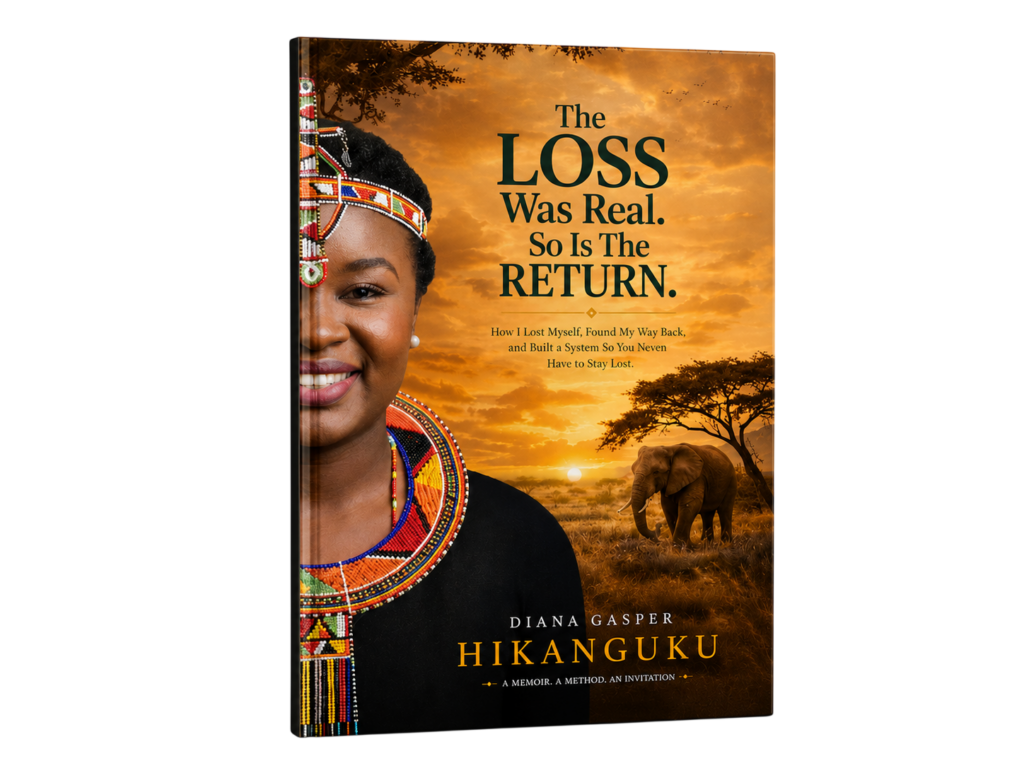
The Loss Was Real. So Is The Return begins with a conversation Diana was not supposed to hear. A friend describes the woman Diana used to be: stylish, enthusiastic, quick to laugh, and fully present. Then the friend names what has changed. Diana has become short-tempered. She panics. Fear has replaced the light in her eyes. The words become an alarm because they are true. Diana has lost herself so quietly that she did not recognize the disappearance until someone else spoke it aloud.
From that moment, the book travels backward and forward through the life that produced both the loss and the return. It begins with the building: Diana’s decision to leave nursing, the dream of working in aviation, the shock of losing an airline job while pregnant, the long walks home, and the travel agency she imagined before anyone around her believed it was possible. It follows the growth of a business that connected travelers, companies, and government leaders across countries. It also reveals the cost of carrying motherhood, ambition, guilt, pressure, and unprocessed loss at the same time.
Invisible grief
The central language of the book is invisible grief. Diana uses the term for losses that are real to the body and identity even when society provides no funeral, flowers, public ritual, or time away from work. A relationship without closure can create invisible grief. So can a job that defined a person, a business that did not survive, the end of a marriage, a dream that unraveled, single parenthood, financial loss, relocation, or the disappearance of an earlier identity. These losses are often minimized because someone else has suffered more, yet grief is not measured by public approval. It is shaped by what the loss meant to the person carrying it.
Diana describes how invisible grief can hide inside exhaustion, irritability, brain fog, emotional numbness, unfinished goals, and the feeling of observing life rather than fully inhabiting it. High achievers are especially capable of continuing to function while something inside them is falling apart.
Four animal archetypes
Inspired by Diana’s years in African travel and safari, these archetypes are mirrors that help readers notice their strengths, wounds, and habitual ways of carrying grief.
The Elephant
Secure attachment. The person who holds the herd while rarely allowing the herd to hold them.
The Monkey
Anxious attachment. Loving deeply while scanning for the possibility that love may disappear.
The Leopard
The self-sufficient person who processes alone and may mistake isolation for healing.
The Hyena
The tension of wanting connection while expecting harm.
Choose your edition
Read the story in the format that fits your journey.
Digital Edition
E-Book
Read on your phone, tablet, or e-reader. Ideal for instant access and for keeping Diana’s reflections close wherever you are.
$12.99
- EPUB / Kindle-ready
- Portable and searchable
- Immediate retailer delivery
Readers Favorite
Paperback
A comfortable edition for everyday reading, journaling beside the text, book clubs, and meaningful gifts.
$23.99
- Premium matte presentation
- Easy reading format
- Ideal for notes and discussion
Collector Edition
Hardcover
A lasting keepsake edition for your personal library or for someone beginning a difficult but hopeful season.
$29.99
- Durable hardbound finish
- Elegant presentation
- A meaningful gift edition
What you will find inside
- A personal memoir that moves from nursing and entrepreneurship into loss, identity, faith, and restoration.
- A clear explanation of invisible grief and the many losses that receive no public ceremony.
- Four animal archetypes — Elephant, Monkey, Leopard, and Hyena — as mirrors for different ways people carry grief and connection.
- The five stages of The Return: Kuhisi, Kukata, Nguvu Kurudi, Ulinzi na Kusimama, and Kurudi Kwako.
- Reflection prompts, a closing invitation, and language readers can use to understand what they are carrying.
For book clubs, faith communities, and groups
Book clubs can use the five-part structure — The Building, The Losing, The Finding, The Testing, and The Invitation — as a natural discussion sequence. Faith communities may wish to explore the relationship between grief, witness, discernment, and calling. Diaspora communities may connect especially with the chapters on leaving home, translating identity, and holding gratitude and grief together.
Bulk and group orders
Book clubs, faith communities, support circles, diaspora organizations, professional groups, educational programs, and event hosts may request information about multiple-copy orders. Bulk prices, minimum quantities, shipping regions, and lead times are confirmed individually — reach out via the Order Now page.